
When Light Meets Tree

“What a beautiful church!...Would you mind if we took down all the crosses?”
A strange thing happens when Jewish groups seek to rent worship space from other religious groups. The Jewish group scans the space for religious iconography and then, hopefully with a great deal of tact, asks if it would be possible for the host religious group to allow its religious symbols to be covered or removed. If the answer is no, it can kill the deal.
For most of the years I was the rabbi of a synagogue in Montclair, NJ, we rented space from churches. When the First Baptist Church was bought by the Tabernacle of Love, we lost our space. We jokingly referred to the new church as the Tabernacle of Shove. Luckily, we were able to find new space at Central Presbyterian Church.
The churches we rented from were exceptionally gracious. They could have easily gotten offended, but they accepted our quirky religious requests with a sense of humor and a welcoming embrace.
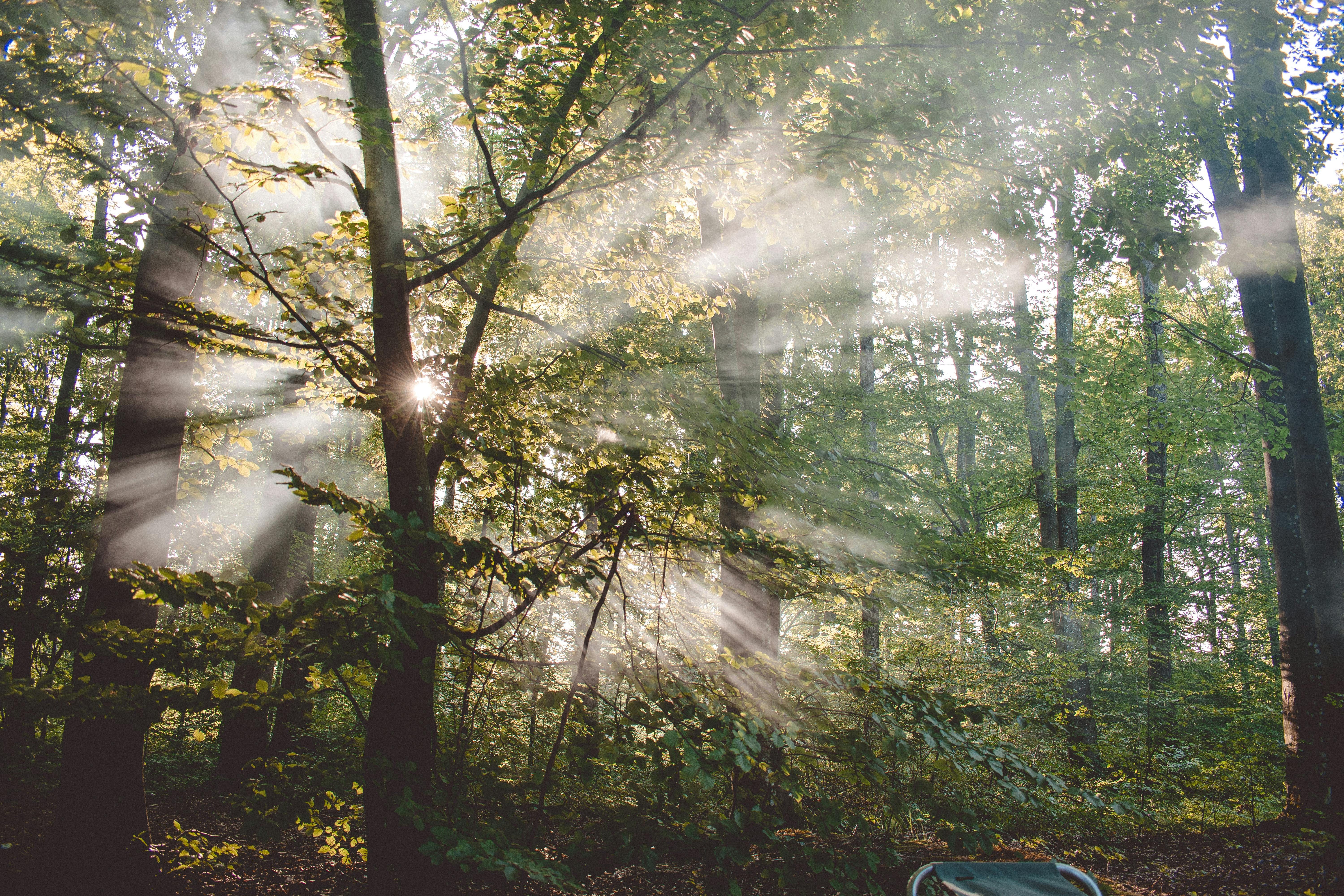
When light meets tree
Jews are picky about the display of religious symbols. It goes back to Exodus 20:4-5: “Don’t make yourself an idol in the form of anything in the heavens above, on the earth below, or in the waters beneath. Don’t bow down to them or worship them.”
When I was growing up, it was rare for a Jewish household to have a Christmas tree. Some Jews who had trees found a clever way of explaining it. It wasn’t a Christmas tree; it was a Hanukkah bush! Calling their trees “Hanukkah bushes” was a tongue-in-cheek way for Jews to enjoy having a Christmas symbol in the house while simultaneously acknowledging their Jewishness.
The Christmas tree’s ability to attract people who have no religious connection to the story of Jesus’s birth is tied to the marriage of two powerful symbols: trees and light.
An earlier age believed the world to be comprised of a flat earth, an unfathomably deep underground and a distant heavenly realm. With their roots deep in the earth and their leaves reaching to the heavens, trees were natural magnets for the religious imagination. Mountains had a similar appeal.
For the ancients, mountains and trees could serve as an axis mundi—a world axis uniting the upper and nether regions with the middle realm inhabited by humans. And even if we think it has nothing to do with religion, trees and mountains still inspire us.
We humans are also fascinated with light. Art plays with light and shadow. Fire warms us, cooks our food, and can also destroy. The Bible’s creation story starts with the words, “Let there be light.” This mysterious light precedes the creation of the sun and moon.
In the Bible, lightning flashes repeatedly over Mt. Sinai and God speaks to the people gathered. When a bush is filled with burning light, God speaks to Moses.
When (the mysterious) light meets (the axis mundi) tree, God speaks.
Both the Christmas tree and the Hanukkah menorah1 combine the symbols of light and tree. Here’s the description of the original Temple menorah found in the book of Exodus:
And there shall be six branches going out of the sides: three branches of the candlestick out of one side, and three branches of the candlestick out of the other side. Three cups made like almond-blossoms in one branch, a calyx and a flower; and three cups made like almond-blossoms in the other branch, a calyx and a flower; so for the six branches going out of the candlestick. [Exodus 25:32-33]
The menorah is a candelabra that brings to mind a tree or bush.
“Don’t make yourself an idol in the form of anything in the heavens above, on the earth below, or in the waters beneath.”
The original Temple menorah flirted with the edges of what was allowed. It served as the source of light for the innermost chamber of an otherwise pitch-black space. It wasn’t a tree; it was a reminder of a tree. It wasn’t found in homes; it was found in the innermost room in the Temple where few people would ever see it.
The Hanukkah menorah isn’t the same as the Temple menorah—it has nine branches rather than seven. And it doesn’t need to follow a design that includes branches, calyxes, flowers, and blossoms. Still, bringing a reminder of the Temple menorah into the home was a radical religious innovation. It brought the Temple’s “light meets tree” symbol out of its hiding place and into every living room.
The same but different
Drawing from the same well of ancient and universal symbols, both Judaism and Christianity have constructed celebrations of light during the darkest time of year. In their shared symbols of trees and light, Hanukkah and Christmas remind us that despite differences of history, culture, and religion, our lives are shaped by what Margaret Mead called “this fragile earth, our island home.”
And yet, the differences between Jewish and Christian religious practices are as important as the similarities. The Hanukkah menorah is a candelabra. It’s a reminder of the Temple menorah which is a reminder of a tree. A Christmas tree is an actual evergreen covered in lights. This use of concrete rather than abstract symbolism is a consistent difference between Christianity and Judaism.2
The particular way each tradition chooses to express the symbolic power of trees and light testifies to the richness and variety within the human community. Considered together, the Christmas tree and the Hanukkah menorah can enhance our appreciation for both our unity and our differences.
My book makes a great holiday gift. Or birthday gift. Or no particular reason gift. Here’s an excerpt of Spirituality&Practice’s review:
The journey of reading Where Are You feels like traveling a spiral, encountering spiritual and psychological ideas and questions from a bit of distance, then gradually drawing closer and deeper. We are asked to look closer at our own lives, identities, and egos. We are drawn deeper into our beings, away from constructed identities and self-perceptions. Along the way we gain more trust in our gentle and wise companion.
The proper name for this religious symbol is hanukkiah but it’s frequently referred to as a menorah.
Another example: The Jewish God has no form and an unpronounceable name. The Christian God took the form of a man. His name is Jesus.
I'm proud (perhaps sinfully so) that it was a Presbyterian church that was able to offer you hospitality.
Seasons' Greetings Dan! (My favorite inclusive blessing this time of year)
A beautiful reminder to appreciate the light within the tree, in whatever form it comes. Thank you!